

When we think of self-care, do we forget to count downtime? I'm thinking here not so much about downtime that is scheduled, as it were, but rather that which is almost circumstantial. In other words, what are the positive spin-offs we derive from the "negative spaces" in our lives, as well as the activities we do that require us to either access or create space?
Nothing is enough.

A handful of insights, gathered from various sources, about productivity, rest, and self-worth. Photo by Kyle Collins on Pexels 1. Permission to start at zero. I’ve been listening to a series of short talks called “Time Management for Mortals”, delivered by Oliver Burkeman, who wrote a book on the same topic, on the Waking Up … Continue reading Nothing is enough.
The journey of a kombucha bottle filled with Ganges water

The first time I swam in the Ganges was the first morning after our arrival at the Ashram. I had set my alarm early enough to get a walk in before morning asanas, and headed upriver. I was feeling the effects of a 05h30 wakeup after not such a great night’s sleep – daytime temperatures … Continue reading The journey of a kombucha bottle filled with Ganges water
Struggle and Acceptance: How to avoid giving yourself uphill

During a recent three-week hiking trip, there were times where I felt more than a little "on edge". I took these moments of struggle as an opportunity to reflect on something broader: that we can be in a certain amount of discomfort or pain, or generally in a bad situation, without suffering. Assuming we are not being faced with a mortal threat, and leaving aside extreme and lifelong hardship for the time being, is it possible for something to be challenging without it being a "fight"? Can something be a struggle without us struggling with it?
Solo: Reflections on solitude on an overnight hike

In April 2022, I did a solo overnight hike in the mountains of the Western Cape in South Africa. My objective, if I can put it that way, was not so much to hike but to observe. Accordingly, what follows is not so much a hike report but a collection of observations or field notes, both outer and inner.
Past Tense: The anxious voices of history

Whereas in my last piece I considered anxiety as fear of the future, in this post I reflect on the ways in which it might in fact derive from the past. Rather than being a “fear of future feelings”, as I put it, perhaps anxiety can be viewed as a way in which our fearful past selves keep up with us.
Temporal Whiplash: Anxiety and Fear of the Future that is Now

I once heard that the source of all anxiety is fear of the future, and the source of all depression is dwelling in the past. As a rough shortcut to understanding these two very common mental afflictions, this has appealing simplicity. But as one who has experienced both depression and anxiety, I have had a few reflections on the relationship between suffering and our orientation towards time. When we are anxious, where in time do we tend to be placing our focus? Or rather, where do we believe we are placing our focus, and are we sometimes fooling ourselves?
Thinking about Thinking (too much): Critical versus Over Thinking

During a recent masterclass I attended on critical thinking, as part of a virtual internship for third-year quantitative students, one of the interns asked this question in the chat: “What is the difference between thinking critically and overthinking?” As someone who identifies personally as an overthinker, I thought it would be interesting to explore how we think about these two ways of thinking. What do we really mean by them, and how do they impact us as we navigate a world that is increasingly driven by (mis)information, data, and knowledge work?
Stay “Soft”: Openness and vulnerability in the service of lifelong learning

My reflections on the value of staying open and vulnerable in order to stay flexible and adaptable - in short, to be a lifelong learner. This was inspired by participating in a virtual internship for a group of just under 200 South African third-year university students in the quantitative fields, which introduced them to careers in financial services but also to the Four C's of 21st Century Learning.
Saving People’s Sanity, One Basic Query at a Time

I know that the stereotype of the IT team spending most of their time answering the phone with “Have you tried turning it off and on again?” must be based at least loosely on reality (and of course I know they made a series around it). I know it must also be a genuine pain when responding to the same basic and often dumbfounding queries takes up most of one’s working life. But for what it’s worth, I would like to point out that, besides helping people fix problems that they might often be able to sort out themselves, support staff are adding potentially much more value to their clients’ lives.
On virtues

My mother used to quote this poem (which I only recently Googled to discover that it was penned by the same man who gave us The Sheep Pig): “Patience is a virtue, Virtue is a grace, Grace is a little girl who wouldn’t wash her face.” - Dick King Smith If there isn’t some cynicism around virtues themselves, I believe there is certainly cynicism around aspiring towards them. Where does this come from? What is the value of virtues? And is there value in contemplating qualities that might seem lofty and vague at best, and therefore unattainable or meaningless at worst?
Real Part 3: The Blind Rise

In Real: Part 2, I spoke about how our experience can shape our consciousness, specifically our awareness and understanding of others. I considered how privilege can make us blind to others’ perspectives and other people’s ways of being in the world. In this post, I ask the question: Once we’ve recognised this – once we’re confronted with the (usually severe) limitations of our own perspectives – what then? How do we show up nonetheless? How do we embark courageously on a journey of “filling in the picture”, of updating our maps, knowing that not only have we been blind and somewhat stupid up until this point, but also we will necessarily get it wrong and cause further hurt along the way? Finally, I explore what showing up means in terms of how we engage with reality.
Real (Part 2): The reality of perspectives and privilege

How much of the world is real to you? How big is the “real estate” in your mind? To me, one major aspect of reality awareness is recognising different subjective realities. In other words, I am moving from knowing the self to knowing and understanding others.
Real (Part 1)

What makes us “real”? I’m not talking about knowing whether or not we exist, whether we are live flesh and blood, or even whether we are conscious, but rather about what makes us real “in context” - and, more importantly, "in relation". In Margery Williams's The Velveteen Rabbit, the Skin Horse tells the Rabbit that we become Real by being loved. Are we not also seen into realness?
The Power of the Third Person

In a webinar I attended once on the value of presence, the presenters shared a metaphor for being mindful of your own thoughts: "Engage your third person". In storytelling, the third person is used as a form of narration that is outside of the action. Can we play third person or “third party” to the action in our own minds? Are we able to play not just the role of mediator, but also of witness? And when would this be useful?
Ask What, not Why

In my recent work, which involved exploring how to teach critical thinking to university students, I began asking myself questions about how we ask questions. Personally, I've realised certain downsides to the “why” approach to life. On the one hand, I identify strongly as a “why” person, to the extent that my Instagram motto is “All who wonder are not lost”. On the other hand, I also identify as an overthinker, and I’ve come to recognise the effects that ceaseless questioning has not only on my own anxiety levels, but on others. So, I’ve come up with some experimental advice for those who, like me, are prone to overthinking: Try asking "what" instead of “why”. Let me explain (no irony lost there...)
Invisible Threads Part 4: Unravelling
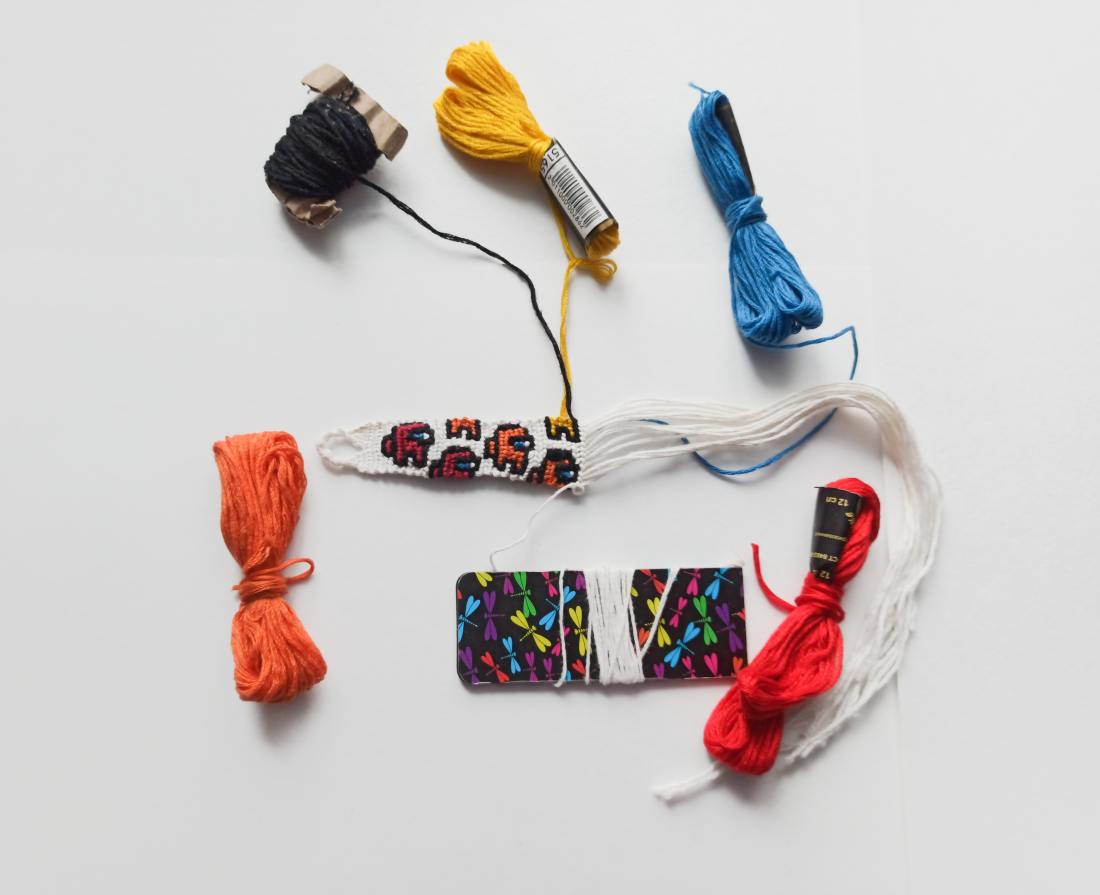
Throughout life I've often struggled with “not seeing the wood for the trees”, but sometimes I think the rest of the world spends too much time doing the opposite and ignoring the trees completely. While focusing on the big picture is useful, this article is about the ways in which the macro can oversimplify the micro, and why this can have a real influence on how we think and behave towards others. One device that helps us unpack and interrogate this is story - and its big sister, narrative. We’ll look at narratives at the macro level; stories at the micro level; and how, while the former serves essentially to compress reality, working with the latter can help us expand it. The bigger implication of all this is that examining the micro could be useful for change at a personal, interpersonal and cultural level.
Invisible Threads Part 3: It’s not (all) about you

In my previous post in this series, I highlighted that one of the defining features of a good story is that it takes you somewhere. If stories direct people’s attention, they also help us connect and take people with us. This post offers another perspective on why, when we hear a story, we can’t help but lean forward and engage. In short, it’s because our brains are participants, not observers. They can’t help being part of the action, and the reason for this is linked to our social wiring. Finally, I explore the implications for presenting in a way that incorporates this key principle of storytelling: it’s about them, not you.
Invisible Threads Part 2: What makes a good story?

I once attended a webinar on the power of storytelling in the business world, in which the following definition was offered: “Story is truth, well told”. There are two elements at play here: the truth, and the telling. Truth without telling could simply be called facts; a story, however, has to ring true, and it has to be told in a way that’s meaningful. Perhaps one interpretation of “truth, well told” is that story is how we make sense of truth. In a previous post, I was inspired by the idea that our brains care more about possibility than truth; this is probably one reason why our brains love a good story. Cutting deeper, what is it that forms the bridge between plain and simple truth, and a story that we buy into? After all, a “good story” can be a complicit fantasy – we know we are being taken for a ride and we go along willingly, often for entertainment value – or it can be deception. We like stories, but we also care about the facts, because we want to trust the storyteller. What makes something “ring true”?
Invisible Threads Part 1: Casting On

Author Antoine de Saint-Exupéry once wrote: “What is essential is invisible to the eye.” I have come to notice that this is the case with some of the most important things in life: you only notice them when they are missing. What makes story almost invisible is its effectiveness - it is so effective because it is so effortless. In this series of articles to follow, I explore the pervasiveness of story, how to use it effectively on purpose, the potential pitfalls of story, and how we can use it to make sense of our lives and the way we think and behave. I surface and examine the aspects of story that can either derail us if we don’t notice them, or can be used to our advantage in various ways.
The dance of self-love

Self-love is like a dance in which we move between acceptance and growth; between pushing and pulling on one hand and holding and protecting on the other. As fully integrated beings, we need to ultimately attempt to see that these are somehow one and the same thing.
Keeping Time: Synchronicity, regulation and well-being

To attune means to be receptive to something, to adapt or acclimatise towards it, or to bring things into harmony. This article explores some of the many ways we “keep time” by attuning to others, to our environment, and to ourselves, and how this synchronicity regulates how we function as ultimately social beings.
The limits of authenticity

What is authenticity? What does it mean to be our true selves? What does it mean to “show up”, and how are these two things different? Does authenticity mean bringing all of ourselves to every moment? And ultimately, what is the point of authenticity?
The Heart of Asking

To me, a question is the one of the most beautiful devices created by humankind. A request, on the other hand, might just be one of the trickiest. To ask a question is to open and step boldly out the door; to make a request is to stand at the threshold not knowing which way the door will swing.
Selfie-consciousness and the Zoom camera
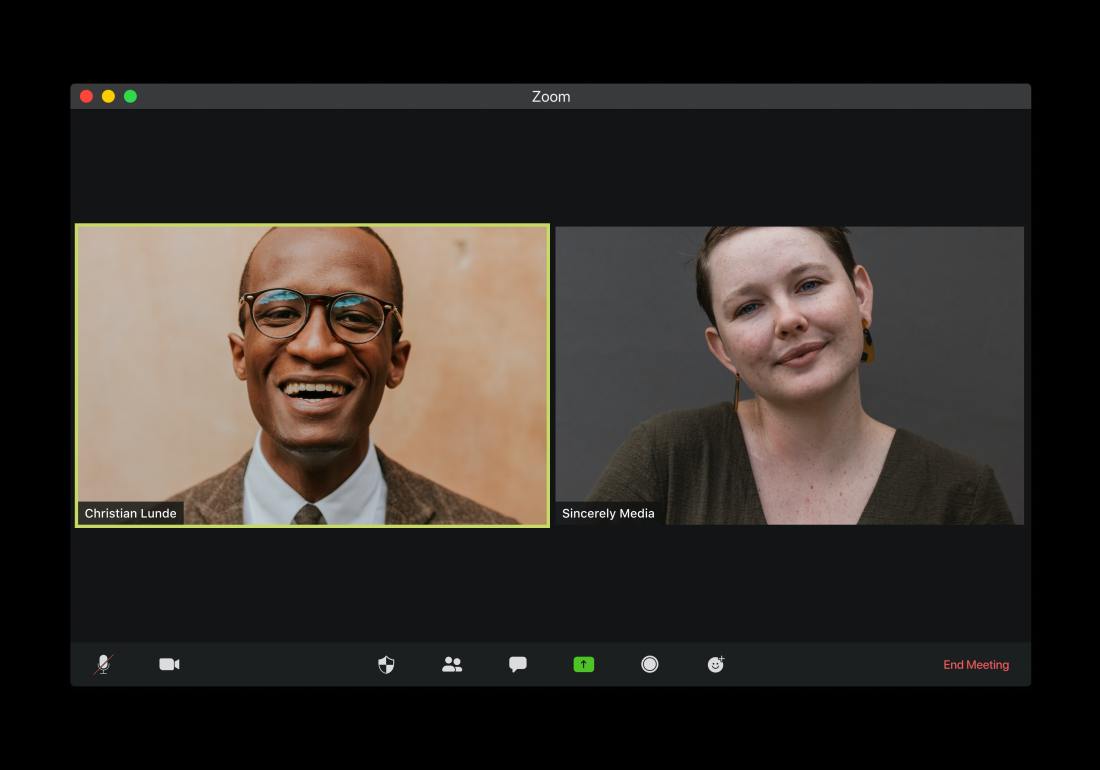
I recently learned how to hide yourself on Zoom. No, I’m not talking about turning off your camera – that’s something we all learned to do many months ago, whether to save bandwidth or to spare others the sight of our morning hair or living rooms. Rather, I’m talking about turning off the video of ourselves that we see by default whenever our camera is switched on. In other words, I’m talking about letting others see you without having to see a constant reflection of yourself. Like, you know, how meetings used to be.
Free Will, Control and Giving Everyone a Break

We think we think our thoughts. We think we’re starting each moment in the driver’s seat. But when you really reflect on where all of our thoughts, feelings, beliefs and choices come from. you start to see that this belief has no foundation. Our thoughts, as it were, think us. What if we were able to accept that control is an illusion - and that not only are we not really in the driver's seat, but nobody is?
Nobody Home: What happens when we dethrone our illusory inner Mini-Me
From others’ perspective, you are a person. What are you from your own perspective? We live in our heads, but are we our minds? And what might we be without - or beyond - our imagined and embodied selves?
Welcome Worry

For me, and I’m sure for many, gathering information is a coping mechanism. It’s a distraction. It’s a strategy to create the impression of being productive and in control. It’s a way to avoid discomfort. Unfortunately, it doesn’t always allay anxiety – in fact, quite the opposite is often true. But after much research and reflection (my other obsession), I’ve started to consider whether perhaps I need to reframe the way I think about these compulsions, instead of trying to fight or fix or apologise for them. Instead of seeing them as the strategies of an incurable neurotic, maybe I need to tell myself a different story.
All in your head

I had a realisation recently: "It’s all in your head” doesn’t necessarily mean “It’s not real”. This is a personal stance with feeling behind it, and my feeling is essentially that being told that something is “all in your head”, or suspecting the same, can feel for the most part invalidating, isolating and even a bit cruel. The specific example I had in mind was when people use this to explain when somebody experiences physiological symptoms which seem to have no obvious physical origin – typical examples being chronic pain, fatigue or fibromyalgia. In this case, “It’s all in your head” usually implies “There’s something wrong in your head”, which, true or not, may be interpreted as “There’s something wrong with YOU” “It’s all in your head”, in other words, to me usually suggests “It’s not real”, which is to invalidate someone’s personal experience – or at least to tell them they’re on their own.
Mental Health is Invisible

Perhaps one of the reasons mental health is so hard for us to talk about, let alone deal with, is that it’s mostly almost invisible to us. That is, not only is it not spoken about at a social and societal level, it’s often not even really noticed at an individual level. Our mental problems are less visible to us than our other physical problems precisely because we’re in them. Put differently: we don’t look at them, we look from them. This is Part 1 of a series on the topic of the nature of mind and the concept of self.
Looking myself in the I

When someone looks you in the eyes, you become a person to that other person. At the same time, you become more aware of how you see yourself, of your projected mirror-face. In other words, you become self-conscious. Is self-consciousness what's really behind our inability to see others? Is the ability to choose between being a self and being a group, and even forgetting oneself, a privilege? And is it possible to replace self-consciousness with self-awareness, or just ordinary presence – possibly even without a self in the mix?
Privilege is what we take for granted.

Privilege is not having to look at things hidden in plain sight.
Burnout and the art of not taking oneself too personally

As a person who's prone to getting burned at work, I've come to realise that I'm often the one feeding the fire. It’s hard to take responsibility for burnout when our culture of glorified individualism and over-achievement has a lot to answer for, and when work-life boundaries get increasingly dissolved by technology, but we have to own anything we wish to change. And perhaps, while taking personal ownership for it, we can also take burnout less personally.
Overthinking and The Committee

Who’s on your "committee”? As an overthinker, as well as a chronic pollster of others' opinions, I've come to wonder: What about the committee inside my own head? And what if talking to ourselves in the right way can help us to pacify the tiresome self-talk?
Outside Inside

Open awareness meditation is not about choosing a single focus or anchor but rather about keeping an open focus (if that’s not a contradiction in terms) and staying anchored to the moment itself.
Being Mindfully Curious

Curiosity says we should place greater value on questions than answers; on seeking understanding rather than making assumptions; and on challenging the things we take for granted every day. But equally importantly, I think, curiosity is about a quality of attention rather than a sure-fire technique to get to solutions or closure. There is a difference between wanting to understand something and needing to have certainty about it. What are some things we can do to incorporate curiosity in a mindful way, to suspend our habitual responding?
Music, Mindfulness and Flow
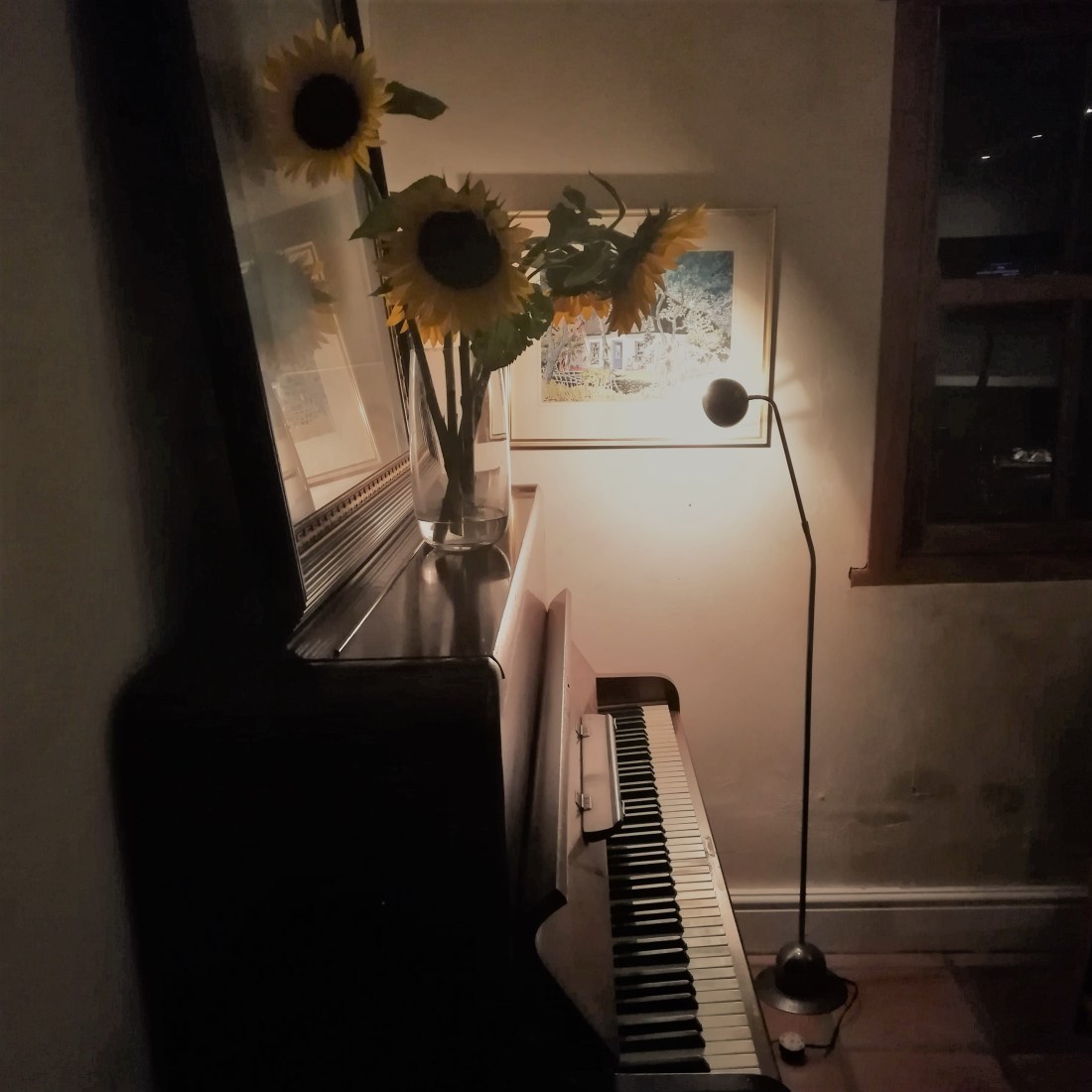
I’ve more than once noticed some interesting links between mindfulness and performing classical music. It might seem a bit esoteric, so bear with me. This article is not just about music; it is about the parallels between executing a craft and different states of mind and productivity.
Self Care versus Self Compassion

What are the differences between self-care and self-compassion? There is a sense that the one is about behaviour and the other is about regard; hence, self-care is something we do, in the form of activities or rituals, while self-compassion (or perhaps more commonly referred to as self-love) is an attitude we have towards ourselves. In this post I explore the issues I have with some interpretations of self-care in the mainstream – how it has become monetised, used as yet another form of consumerism, and even become a way of avoiding responsibility for real self-nurturing and growth. But I’ve also been reminded that self-compassion is the conviction, the fundamental self-acceptance, that is necessary to enable self-care in the first place. After all, some days you’re too down to even self-sustain, let alone deem yourself worthy of looking after.
You are not finished

Even though we might spend most of our time absorbed in present or future-focused activities, chances are that our evaluations of ourselves in the present moment are based almost entirely on the past. One theory even suggests we have a bias towards seeing ourselves as “complete” in the present moment. If the past is going to prompt us to change in a way that’s positive, and the present moment is where we have the power to begin any change and be clear-sighted about the future, then we need a space right here to be able to “put down” what’s gone before.
The Opposite of Thinking

What got me practising mindfulness? Dinging my brain in a bike accident in 2014. While recovering from a concussion, I suddenly had the time - five weeks booked off work - to sit and stare into space. No emails, no reading, no thinking. And this is how I discovered that it’s perfectly possible to sit and do nothing and actually enjoy it. In fact, I wondered whether right now is in fact the best place to be content.
Swapping Notes: An exchange with a taxi driver in India

The game of getting around as a solo tourist in Indian cities is a topic of its own. This is the story of one interesting exchange I had with a taxi driver in Jaipur. We didn't speak each other's language but, well, money talked (kind of).
 All & None of the Above