
From self-talk to giving myself a talking to
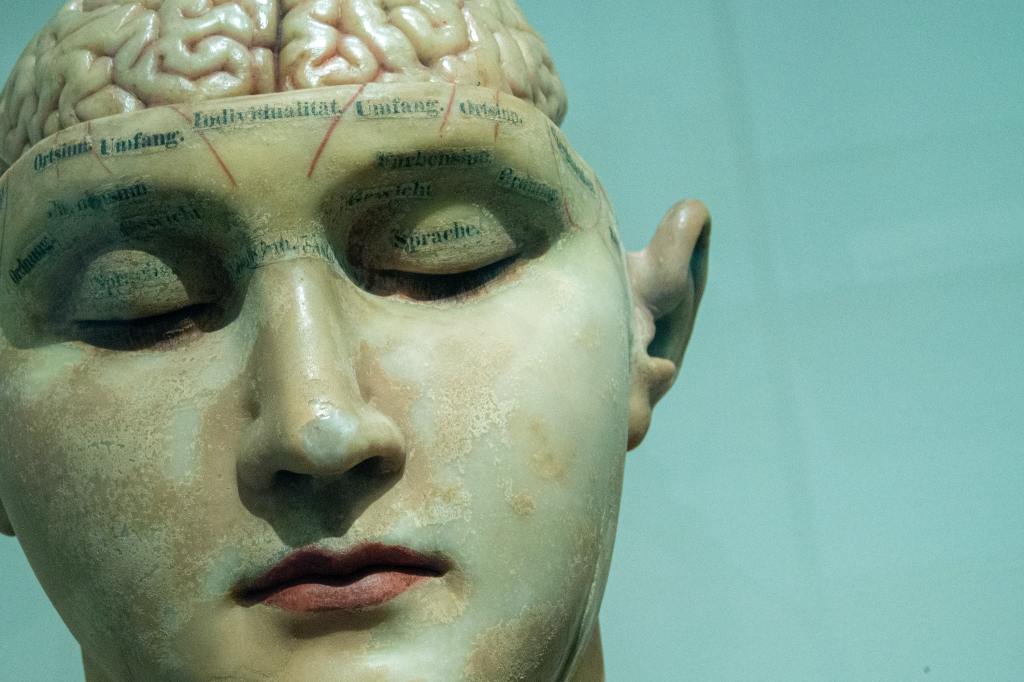
Before I launched my blog and was still deciding what to call it, I bounced the name off one of my good friends, complete with a full explanation of what it meant in all its nuances and how I had thought of it. “What do you think?” I said, adding: “I haven’t shared it with many people; you’re one of the first!” She replied with “It’s great. But also remember that you don’t always need a committee.”
Now this particular friend was my boss once upon a time, and so she had gotten used to my habit of what I call “polling”: I like to test my ideas. Quite thoroughly, in fact. So I will often ask others for their thoughts and opinions before I decide on something – sometimes even before I write an email. “Do you think I should say this?”, “Do you think this might come across this way or that way…?” etc is how it might sound. As my former boss, my friend had had to bear the brunt of my thinking out loud, and she and other managers after her would point it out to me in a constructive but considered way. So the “you don’t need a committee” reminder really hit home for me, though of course it came from a kind and understanding source.
Later I reflected: Who’s really on “the committee”? Brené Brown of Daring Greatly and Rising Strong reminds us to be very deliberate about those who qualify to be on our “committee”, and that those whose opinions truly matter should fit on a one-inch by one-inch square of paper. So when it comes to important questions, mostly the committee consists of the people whose opinions I trust.
But what about the committee inside my own head? I often suspect my thinking out loud is a sort of overflow of all the debating voices going on and on inside, and my perhaps not-so-so-subtle need is for others to help me please sort them all out.
I do realise this is often unfair and irresponsible. But seriously, it’s like the House of Commons in there, people. Or, in adapted terms that South Africans will find more familiar, it’s like a panel of Dishonourable Members who refuse to sit down.
In simple terms, I’m an overthinker. Let me give you an example of the content of my brain when Dishonourable Overthinker kicks in – a sort of adapted transcript of the inner court proceedings around a recent (and, notably, extremely minor and inconsequential) incident that happened to me. I decided I wanted to try and piece together the internal narrative in an attempt to analyse what really goes on when I get myself into a spin like that.
Before I do, I should warn you that it’s not very pretty. But also, let me hint at how it ended. After three hours (yes) of self-talk, I finally calmed down by giving myself a talking to. But it was a different kind of talking to, one I arrived at after attempting everything else that might distract or calm me down. I’ll describe it later.
The case before the committee
The issue at hand was this (wait for it…): I was second-guessing a decision about not going to a party.(Looking back in the times of Corona, what a luxury this dilemma was…)
The abridged backstory: A friend was having a house party. The friend – we’ll call him Dave – was actually more a friend of another friend (we’ll call her Sam), who wasn’t going to the party, so I would really only know Dave there, and not very well. My husband wasn’t overly keen because he knew Dave even less than I did. Also, the party was happening out of town on the evening of a day we were already driving home from a weekend road trip. So, I had told Dave ahead of time that we were tentative for all the practical reasons mentioned, essentially saying we were likely to be too tired. Acceptable enough in this day and age.
And then I stayed on the WhatsApp group.
On the drive home, people started chatting about the party on the group. Remember, these were people I didn’t know from a bar of soap. And yet, being the millennial that I am … I guess I got FOMO. I wavered. I checked that husband was definitely still not keen to go. Having confirmed this, I took a deep breath, briefly made our excuses on the group, and then exited it. I thought this would help me forget about it and move on. Instead, the head-spinning started. The court was in session.
Brain vs Brain et al: The transcript
Let me try capture some of the arguments being thrown around:

As is often the case, this did not ease off until the time when the actual event in question started, and I was like: “It’s too late now. Phew, what a relief”. I must also point out that this kind of brain-churning is not an isolated, atypical example for me – it’s an all-too-familiar train-wreck. I saw it coming, sat back and said “Here we go again”. What does it all mean?
Postmortem: My brain wrote a thesis on Reasons To Go or Not To Go To a Fricking Party
I marvel at how much was going on in the court in my head that day. Essentially, what happened was my FOMO (Fear of Missing Out) morphed into FONCATE (Fear of Not Covering All The Evidence).
Being chronically indecisive, it seems I attempt to at least be thoroughly considered about it. I go through every option and eventuality on both sides. In theory, thoroughly considering all the evidence should lead to a thoroughly considered decision. But in my case, it led to my wobbling maniacally on the fence. I made a sort-of decision – and then I had to keep making it. By FONCATE-ing all over the place for three hours.
Three things were happening:
Firstly, to convince the internal committee that my position (staying home) was justified, I felt I had to account for everything: all of my time, often listing pretty much every social event I’d gone to and everything I had planned in the near- to mid-term past and future, to prove that I wasn’t missing out. Of course the whole story thus became grossly significant, my non-attendance of one little party becoming an representation of my entire social character.
Secondly, my mind somehow found a way to keep coming back to the event and issues in question, no matter how far I tried to get away from it – and I tried to get away from it by some pretty contrived compensation and diversion tactics. For example, I went as far as: “Remember that time we were at a backpackers’ in Spain last year? We hung out with some new people then.” Or, to try distract myself I started thinking of things I appreciate in my life, and I thought of my best friend as an example – and then my mind came back with: “Oh, and what would she say about introverting, and/or being brave?”
Thirdly, I was in fact polling again, but internally. After getting the opinion of my husband, who was actually in the car with me, I started drawing on the opinions of friends who weren’t even present.
The Gallery and the Chief (Self) Justice
I pointed out that in this episode it was like I was compelled to justify myself and my time – but to whom? I’ve also noticed a weird self-consciousness about these mental dilemmas, about “how I look” doing my own thing while other people are out, even though of course nobody can see me.
Who is doing all the judging? I think social media and WhatsApp groups amplify the false impression of visibility. Apart from our internal committee members who are qualified to be there (i.e. the voices of our trusted friends), a whole gallery of imagined others may be crashing the party. These are the voices saying: “Oh, but where were you?”; “Oh, but why didn’t you go?” – the voices of people I hardly know. However odd it might sound to write out what “the voices” are saying, I’m sure we all imagine what others are thinking about us, and that surely this can become part of our self-talk.
But if there’s an internalised “committee” in the form of what others might think, there’s still also our own self-judgment, the Chief (Self-)Judge, presiding over all proceedings. Once I’ve explained myself, I turn to this judge and say, “Is that OK? Is that an acceptable explanation?”. At the worst of times, this turns into a victimising plea: “Can’t you see how hard I’m trying, your Honour? Can’t you see I’m suffering?”
I had called on everyone, including my trusted committee – I’d asked myself what my loved ones, whose opinions matter, would think – and it still wasn’t enough for the Chief Justice. And as you may have noticed, she can also be quite mean.
It’s damned tiresome.
How can we spend so much energy just having to manage these conversations within ourselves? As Eckhart Tolle said, when his chronic anxiety led him to think, in sheer desperation, “I can’t live with myself”: who is the “myself” I can’t live with? And who is the one doing the “living/putting up with”? The one patiently telling myself what to think about and what not to get caught up in? Nevermind the one who is doing all the kicking about, jabbering, and getting caught up in everything.
My attempts at presenting counter-evidence were fruitless. Distraction also failed – I even tried gratitude, happy thoughts.
And here’s where I started seeing the jabbering voices as coming not so much from a boisterous committee but from a small child. A child who kept bringing me objects for admiration, namely her well-formulated arguments and thorough reasoning. A child who wanted to be listened to and acknowledged for being able to think. There she was: Ms Overthinking Brain. As well-developed as her capabilities were, she was still a child that needed attention.
From talking to myself to giving myself a (kind) talking to
That’s how I arrived at the point of realising that maybe I just need to reassure the thinking brain that I see it there; that I see her there and I acknowledge her capabilities. Instead of disputing her arguments or trying advanced diversion tactics, rather just recognise her, let her sit down and talk herself out. Maybe she’s just scared of being discounted, or not being seen, or even being seen as inadequate.
What I actually said to her was this:
“Don’t worry. I will never abandon you. I got you. You don’t have to prove yourself: I know you can. I see you there, I know you’re there. And I’ve never been away from you for a moment either. I’ll always be here.”
Countless times up until that point, I had been telling Overthinking Brain: “OK, you’re done thinking about this, you can stop now”. And still she kept bringing me things, bringing me “thinks”, within moments of each of my increasingly exasperated push-backs, linking countless new thoughts back to the agenda. Trying to prove herself.
What basically pacified her was my saying: “Well done, Brain, you can think!”
Of course, there’s that next layer of superego or self-critic that reacts to that with sarcasm: “Oh jeez, listen to you, trying to be so damn clever, trying to be a smart-ass.” Or: “Do you really need to congratulate yourself for thinking? Pathetic.” Which I guess just comes from more of the same fears.
At the end of the day, in some ways I think it’s good to talk to ourselves. When I was giving my overthinking brain a talking to, I was also trying to befriend it. In fact, that was the only way I could resolve the conflict – by acknowledging Ms Overthinker and her constant need for recognition. Because all the way down I think Overthinking Brain is just afraid of being abandoned or ignored.
It can seem like the bane of our lives is having an ego and then having this other sense of “Me/Us/Self” who has to put up with it. I’m not sure if this other self is superego, or a higher self, or just more ego. But either way, that’s life – you can’t escape the ego. You can just recognise its tricks, its needs and the fact that it’s driven by the constant fear of ceasing to exist.
 All & None of the Above