
Part 5 of Invisible Threads: A series on storytelling
“Instead of the person she had supposed herself to be she will see quite another person.
George Gurdjieff, with gender adaptations, as shared by a dear friend.
This ‘other’ is herself and at the same time not herself.
It is she as other people know her, as she imagines herself and as she appears in actions, words, and so on; but not altogether such as she actually is.
For a woman herself knows that there is a great deal that is unreal, invented, and artificial in this other woman…
You must learn to divide the real from the invented.
And to begin self-observation and self-study it is necessary to divide oneself.
A person must realize that s/he indeed consists of two people.”

A few months ago, I was listening to an interview between two businesswomen I know, on the topic of presence. They were speaking about it broadly in the work context, so their conversation touched on focus, productivity, getting your best work done when your mind is fresh (by, for example, not opening your inbox first thing in the morning), as well as how to be fully present in virtual meetings. One of them observed how the now-common habit of leaving our cameras off is like sitting in a boardroom inside a cardboard box in our pyjamas, which made me laugh.
They walked through the essential steps of a simple mindfulness process, which can be used at the start of a meeting to get everyone grounded and at least figuratively in the room (cameras on or off). They then focused on a key part of any mindfulness practice, which is to observe any thoughts that come up without engaging in them. They used the helpful analogy of watching thoughts pass by like cars on the highway. This reminded me of a similar metaphor I’ve heard from the field of cognitive therapy, which is to see thoughts passing by like dishes on a sushi train. On reflection, I think the car analogy is better because when we do get caught up in passing thoughts, it’s typically less a case of us picking them up selectively, like a tasty looking salmon rose, but of them carrying us away to an unknown destination, like someone else’s Uber Supercar.
Then they used another metaphor to describe the technique: “Engage your third person”. In other words, observe your thoughts as if you were an outsider, a third party to the internal affairs of your mind. As it turns out, this is an idea with great potential beyond the scope of a five-minute breathing practice.
What is the third person? Grammatically, when we speak about the third person, we are talking about the pronouns “he”, “she” or “they” (the first person being “I” or “me”, the second person “you”). In sentence construction, we talk about subject and object – I (subject) speak to you (object) (grammatically, not literally). But in this case, the third person is even more “objective”, as it were, by not being an object at all – they are the one observing the action from the outside.
If the third person is the one outside of the action or interaction, are they neutral and impartial – qualities we usually associate with a third party? And can we play “third party” to the action in our own minds? More than that, are we able to play not just the role of mediator, but also of witness? And when would this be useful?
Narraterminology: The third person in storytelling

In storytelling, there is an entire branch of thinking (called narratology) around whose perspective a narrative should be told from, based on the desired effect on the reader. Writing a novel in the first person – in other words, where the story is told from the perspective of the main protagonist, “I” – produces a very different effect than writing from the third person, which can take the perspective of multiple characters (“She did this, he thought that…”).
Novel writers must decide whether to place the reader inside the mind of the main protagonist, or outside of the story, with or without privileged access to the thoughts and feelings of some or all of the characters, and with or without knowledge of historic or future events (this is known as omniscient or limited third-person narration, respectively). This choice determines not only the perspective of the reader, but more importantly how the story plays out in their mind and how their attitudes towards its characters are shaped and manipulated.
But good novels go beyond choosing the best vantage point for the reader; they make the reader forget that they are there in the first place.
In film, as well as in literature, there’s a technique known as “breaking the fourth wall” – that’s when the characters in a movie turn to the camera and speak directly to the viewer. Some formats do this overtly, resulting in mockumentary-style shows such as The Office; but for others, the viewer is unaware of their own presence until the trick is revealed. Up until that point, while we know that what we’re watching is not real, we are unaware of ourselves as having any role in the events playing out, and have been allowed to forget that we are essentially being voyeurs.
From a meta-perspective, watching movies and shows is a fascinating phenomenon, because in effect we’re allowed to be completely unselfconscious while essentially spying on other people. We are never implicated in the action we are watching, even if we’re offered a very intimate relationship with the main protagonist (one series that plays on this right to the end is the wickedly brilliant Fleabag). We are simultaneously aware that what we’re being shown is fake, but on some level we also believe that it’s real, otherwise we wouldn’t forget ourselves and become not only engrossed but physically engaged with the action (horror movies work, after all).
Now here’s a question: How often do you break the fourth wall of your own thoughts?
The thing about our internal narrative is that, much like a good book, it makes us forget that we’re part of it. We forget that we’re having thoughts. We are in the movie (or book) of our life.
In the introductory quote, Gurdjieff says we are two people – can there be a third person? Isn’t two enough – the thinking mind, and the observing mind (if we’re able to recognise it, and if it is a mind at all)?
Third Person Plural: The conflicted self
Walt Whitman famously wrote of contradicting himself: “I am large; I contain multitudes”. The experience of ambivalence – of being conflicted, or wanting two things at once, or being “in two minds” (or more) about something – is familiar to pretty much everyone. We can also quite easily recognise that we play different roles in different situations, that different aspects of our personality come to the fore in different contexts or around different people.
Some of us may even experience being estranged from our whole self, or feel not only that the persona we show the world is not “the real me” but that our body itself is not a home. Nevermind that we may experience an entire lifetime of our bodies being unacceptable to the standards set by society.
Who are you when you are not playing any role at all? And is there yet another “you”, standing outside (or behind, or even around) “the real you”?
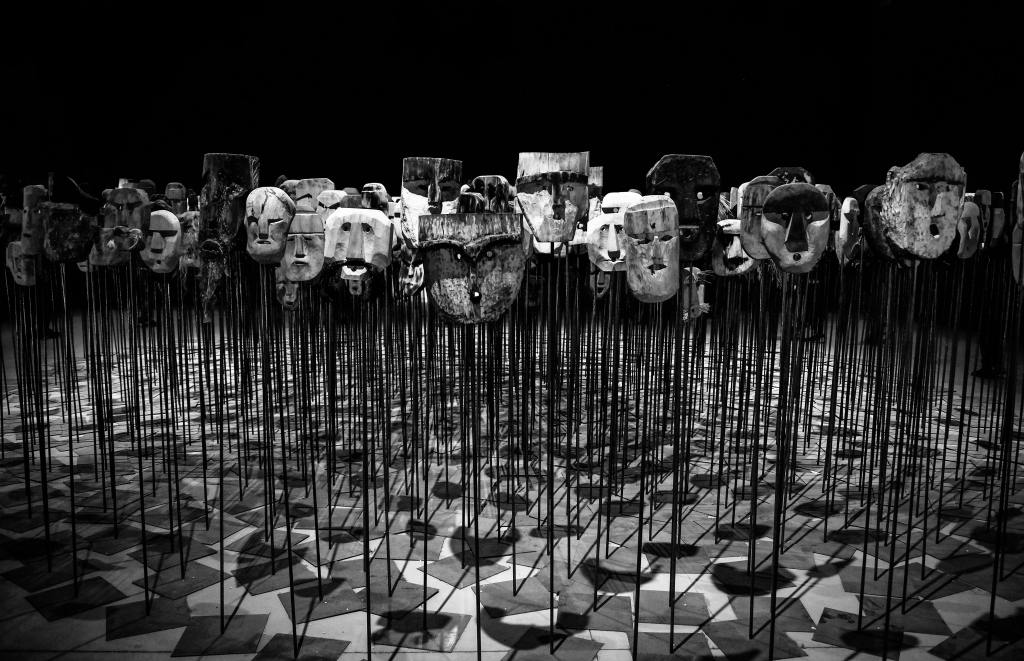
On a mindfulness podcast I once listened to, I remember taking note of a simple technique for handling conflicting thoughts. I think they may have been speaking about compulsion, or even suicidal ideation. The central point was how to cope with feeling compelled to do something (in the extreme, to take one’s own life), and at the same time not wanting to do it. The trick, or rather the invitation, was to notice that one has these two conflicting parts of the self, but also another part that can recognise both – both sides, both compulsions or needs – and then to focus on the part that is doing the recognising.
To linger momentarily on this critical topic, and hopefully to offer a way of understanding and empathising with the essential inner conflict faced by those who consider suicide, is that they do not in fact wish to die but rather to end their pain. This may be experienced as wanting part of themselves – the part that is suffering – to die.
So, there is a part of us that can recognise the conflict within ourselves. What is this “third party” like? Are they simply impartial and detached? Do they make a final judgement? Do they offer guidance, wisdom, or even compassion? Or could they simply be the part of ourselves that offers space for our conflicting thoughts, needs and tendencies to exist simultaneously?
The Third Person and Compassion
The author Zadie Smith wrote about the subjectivity of suffering in a chapter of her recent book of essays, Intimations, written in 2020 amid the COVID-19 outbreak. She had read a story about a teenager who had taken her own life because, under strict lockdown, she could not see her friends. Smith gives voice to our easy judgment – she was a lonely teenager, not a frontline healthcare worker who was unable to cope with the daily trauma of dying patients – and then brings us back to recognising that we can never fully appreciate another’s suffering unless we are in their position; unless we are that person.
One of the reflections I’ve had recently on the topic of empathy and perspective-taking is this: It’s all very well trying to put yourself in someone’s shoes but, frankly, you can’t really. Each person’s experience is their own and a product of everything they have been through, and saying to someone “I know exactly what you mean/how you feel” is, to a certain extent, a huge presumption.
But if there are limits to empathy, in some cases very conscious and deliberate ones, it doesn’t mean we can’t have compassion. And interestingly, the practice of attempting to take the perspective of another person is sometimes the only trick that allows us to be compassionate with ourselves.
Emotional Agility author Susan David, in a Dare to Lead podcast interview with Brené Brown, speaks about a technique she uses when coaching people. When a coachee is faced with a roadblock, she invites them to put themselves in the shoes of a trusted friend. “What would you friend tell you to do?”, she asks them. Suddenly, she says, the picture becomes clear for people and they know what to do. Similarly, in compassion-based meditation practice, the advice given when people struggle to generate loving kindness or compassion towards themselves, is to first generate these feelings for a close friend or loved one – and then to imagine turning this around and directing it at oneself.
In other words, engaging our inner third person often requires us to externalise and “personify” our perspective on ourselves. Much as stepping back from a problem can help us see it in a new light, establishing distance from ourselves can help us deal more skilfully with whatever problems we are faced with. More than this, this metaphorical distancing helps us recognise that what we do, and even who we think we are, are situational and changeable.

The third person and labels: Positionality, Humility and Personhood
If the value of engaging our third person is about being kinder and more understanding to ourselves and others, part of how it works is to help us become more flexible in how we see ourselves and others. But before we can do this, we need to become aware of what our position is towards ourselves and others in the first place.
In a different interview by Brené Brown on her podcast Unlocking Us, she talks to Dr Jason Karlawish on the topic of dementia and Alzheimer’s disease. Karlawish wrote a book called The Problem of Alzheimer’s: How Science, Culture, and Politics Turned a Rare Disease into a Crisis and What We Can Do About It. In the episode, he discusses his journey of understanding the disease not only from the medical and policymaking perspective, but the broader humanitarian one. He also speaks about his approach to writing about the topic, and essentially making sense of it with a more compassionate motivation. Two points stood out for me:
First, Brown asks him about the “working title” of the book, which gives insight into the process of a writer’s relationship with their topic and, most interestingly, how it can change. Generally, the way a writer frames their subject reveals their attitude towards it, and this stance or position is something we might assume to be quite clear and fixed – a decision as consciously made as the choice of which narrative perspective to write from, as we discussed earlier. Also, we might expect medical experts in particular to have a certain and unmoving stance on their domain, in much the same way as we might expect science to have all the answers, or doctors to be able to “fix” conditions as if they were engineering problems.
But Karlawish described how his title evolved in line with his position on the subject. He started with the expert’s voice, using the title: “My experience with Alzheimer’s”. He realised he had to change this because, clearly, the problem wasn’t about him. The next title took a clear position on the problem, something along the lines of “This is the most critical disease of our age” – until Covid came along and trumped that. Finally, he settled on the current title.
The key point was that our very relationship with our subject can evolve – it must, in fact – and therefore we have to be humble about it. The other key point is that we should be conscious of what position we are taking towards our subject matter in the first place. Too often we believe we are neutral, stable observers, particularly when we ourselves are in positions of authority and privilege.

The second interesting point of the interview was when Karlawish spoke about important linguistic turns that took place during the course of his career. In his profession, they currently refer to patients as “persons living with dementia”. But up until quite recently, he admitted, he himself would have used the words: “This patient is demented”. This highlights a common, and I think positive, trend in how we use labels – namely, that the world is moving away from them, or at least treating them with more caution.
To say that a person is demented not only contains judgment (perversely, since labels to do with disability have long been used in a derogatory sense) but also totalises the person into a single, global and even permanent category. To say that a person is living with dementia, on the other hand, is to separate the person from the condition. Personhood is now – or should be – treated as independent from conditions. And this speaks back to the crux of why, as Brown and Karlawish discuss, dementia is so debilitating – because it strips away self-determination, which cuts to the core of what society defines as personhood.
The thing about labels is this: society seems obsessed with telling you what kind of person you are, and this is something we internalise. Hence, the conditions we experience become adjectives we use to describe others and ourselves. And the problem with them is not that they are completely wrong, but that they are incomplete.
The field of psychology, at least in the West, largely maintains that personality doesn’t change very much. Human society seems to agree – if personality in practice is a set of labels, and we’ve recognised that labels not only reduce but crystallise (to be something is permanent). Whether or not we do change over the course of a lifetime, and by how much, the problem with this paradigm is not that we can’t change, but that we can only be a certain way at any point in time, and that that way is limited and simplistic. This is what Reauthoring the World author Chené Swart describes roughly as “flat descriptions of identity”. If people can be simplified into a few descriptors, or even just one, there’s no need for dialogue and no possibility for change.
How flexibly can you describe yourself? How flexibly can you describe others? The more we can describe, and the greater the variety of perspectives we can recognise and take on, the more possibility we can see for our and others’ lives. Note that I’m not talking about having a completely inconsistent or unstable personality; I should also acknowledge that the concept of change and fluidity relating to identity is complex. What I’m talking about is seeing and inviting new alternatives in how we describe ourselves and how we interpret behaviour.
Third Person Omniscient: Past selves, wisdom and using hindsight kindly
Perhaps the most practical instance of how we can usefully apply our “third person” is in how we deal with our self through time.
David Whyte, in his beautiful Consolations, describes maturity as the ability to live with multiple contexts of the self simultaneously. In his conversation with Sam Harris, again on Waking Up, they link this to the rather simplistic advice – for me, almost a hashtag – that is so popularly associated with mindfulness, which is those three words: “Be here now”. In other words, the present moment is all there is, or all that matters.
On one hand, we can’t argue with this – every action we take can be enhanced by being present. As an aside, I sometimes reflect on how much happier we might be if we had no memories or imaginations with which to form grudges or invent worries. On the other hand, “be here now” is perhaps missing an investigation into the fluid and expansive nature of that present moment. Philosophically speaking, where does “now” even start and end? Practically speaking, Sam asks, what does “be here now” mean for helping people deal skilfully with the past?

If maturity, as Whyte suggests, is refusing to choose between past, present and future, but to embrace all three, then operating only in the present is as immature as being “stuck” in the past. And we know this intuitively, because wisdom, which we associate with maturity – across cultures, I think it’s safe to say – is in turn associated with knowing and learning from the past.
When he talks about living with multiple contexts of the self simultaneously, Whyte of course isn’t talking about time travel; he is talking about operating in the present moment in relationship with the past and the future. And he doesn’t just talk about learning from the past, but integrating and reinterpreting it.
In his other piece on forgiveness, he describes how the healing process of forgiving requires us to revisit the part of the self that was wounded; more importantly, the part of ourselves that does the forgiving is not the same as the part of us that was wounded. This point illuminates the distinction between forgiving and forgetting – evolutionarily, we need to remember past wounds in order to learn from them and prevent future injury. So, we cannot forget how we were hurt; rather, a newer, larger version of ourselves revisits the hurt, acknowledges it, and forgives – not out of a need to erase the memory but instead out of compassion, both for ourselves and for the one who hurt us (who may be one and the same). Whyte writes:
“We reimagine ourselves in the light of our maturity and we reimagine the past in the light of our new identity. We allow ourselves to be gifted by a story that is larger than the story that first hurt us and left us bereft”.
David Whyte, Forviveness

When we use hindsight, we are (hopefully) looking back with wisdom, which is to say we make use of that truism that “hindsight is 20:20”. With the distance we’ve established from our present-moment perspective, we can clearly see all the circumstances that led up to the important events in our lives. From the here and now, we can also see how we have changed since those events took place. And with that, we can achieve the ultimate integration: being able to understand that who we were back then was a different person – or rather, where we were back then was different – and yet we are the same person today. And yet because there is that distance between us and us, which makes the difference clearer, we can treat that past self with empathy and kindness.
Not only can we more clearly see the circumstances we were in in the past, but we can also more clearly see the perceptions we were having at the time. In the moment, we are barely even conscious that we are interpreting events as they are happening, and yet that is precisely what we are doing at every moment. If we work at it, we can develop the ability to notice our moment-to-moment interpretations, judgments and filtering of reality. At the very least, we can look backward and recognise that the way we behaved in the past was based on our perceptions of reality at the time – our world view, our mental models, our coping strategies, even our mental or emotional state – which in turn were the product of prior conditioning. Taking it further, we can then reflect and unravel what that conditioning was and where it came from.
In short
Beyond just helping us become more present by detaching from thoughts, our “third person”, or inner observer, can give us perspective. More than that, it can help us recognise the very perspectives we operate with so often and take for granted, and give us the opportunity to try different ways of seeing. It can give us a safe space within ourselves by containing our apparent conflicts and contradictions. It can help us cultivate self-compassion. And it can even help us heal our relationship with our own histories.
 All & None of the Above