
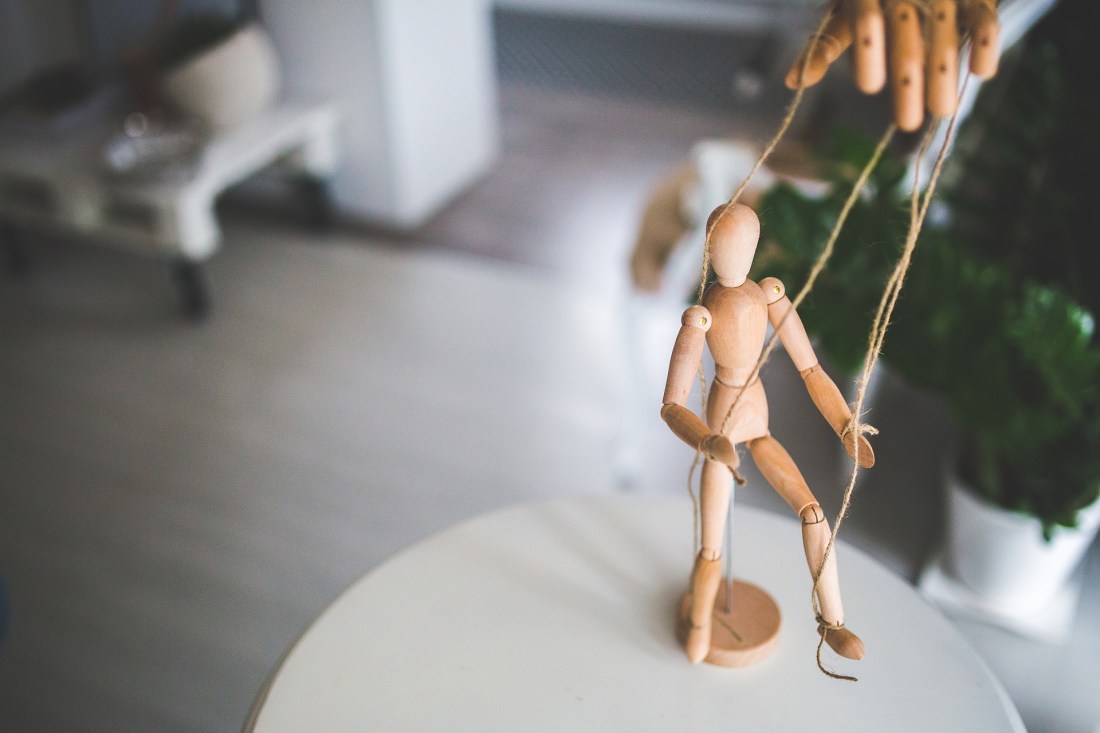
We think we think our thoughts. We think we’re starting each moment in the driver’s seat. But when you really reflect on where all of our thoughts, feelings, beliefs and choices come from. you start to see that this belief has no foundation. Our thoughts, as it were, think us. What if we were able to accept that control is an illusion - and that not only are we not really in the driver's seat, but nobody is?
Category: Nature of Mind and Consciousness
Nobody Home: What happens when we dethrone our illusory inner Mini-Me

From others’ perspective, you are a person. What are you from your own perspective? We live in our heads, but are we our minds? And what might we be without - or beyond - our imagined and embodied selves?
All in your head

I had a realisation recently: "It’s all in your head” doesn’t necessarily mean “It’s not real”. This is a personal stance with feeling behind it, and my feeling is essentially that being told that something is “all in your head”, or suspecting the same, can feel for the most part invalidating, isolating and even a bit cruel. The specific example I had in mind was when people use this to explain when somebody experiences physiological symptoms which seem to have no obvious physical origin – typical examples being chronic pain, fatigue or fibromyalgia. In this case, “It’s all in your head” usually implies “There’s something wrong in your head”, which, true or not, may be interpreted as “There’s something wrong with YOU” “It’s all in your head”, in other words, to me usually suggests “It’s not real”, which is to invalidate someone’s personal experience – or at least to tell them they’re on their own.
Mental Health is Invisible

Perhaps one of the reasons mental health is so hard for us to talk about, let alone deal with, is that it’s mostly almost invisible to us. That is, not only is it not spoken about at a social and societal level, it’s often not even really noticed at an individual level. Our mental problems are less visible to us than our other physical problems precisely because we’re in them. Put differently: we don’t look at them, we look from them. This is Part 1 of a series on the topic of the nature of mind and the concept of self.
Looking myself in the I

When someone looks you in the eyes, you become a person to that other person. At the same time, you become more aware of how you see yourself, of your projected mirror-face. In other words, you become self-conscious. Is self-consciousness what's really behind our inability to see others? Is the ability to choose between being a self and being a group, and even forgetting oneself, a privilege? And is it possible to replace self-consciousness with self-awareness, or just ordinary presence – possibly even without a self in the mix?
Overthinking and The Committee

Who’s on your "committee”? As an overthinker, as well as a chronic pollster of others' opinions, I've come to wonder: What about the committee inside my own head? And what if talking to ourselves in the right way can help us to pacify the tiresome self-talk?
Music, Mindfulness and Flow

I’ve more than once noticed some interesting links between mindfulness and performing classical music. It might seem a bit esoteric, so bear with me. This article is not just about music; it is about the parallels between executing a craft and different states of mind and productivity.
You are not finished

Even though we might spend most of our time absorbed in present or future-focused activities, chances are that our evaluations of ourselves in the present moment are based almost entirely on the past. One theory even suggests we have a bias towards seeing ourselves as “complete” in the present moment. If the past is going to prompt us to change in a way that’s positive, and the present moment is where we have the power to begin any change and be clear-sighted about the future, then we need a space right here to be able to “put down” what’s gone before.
 All & None of the Above