

During a recent masterclass I attended on critical thinking, as part of a virtual internship for third-year quantitative students, one of the interns asked this question in the chat: “What is the difference between thinking critically and overthinking?” As someone who identifies personally as an overthinker, I thought it would be interesting to explore how we think about these two ways of thinking. What do we really mean by them, and how do they impact us as we navigate a world that is increasingly driven by (mis)information, data, and knowledge work?
Category: Humans at Work
Humans as a work in progress. How to be a better human in the workplace, and with and for other humans. Understanding self and identity, our biases, our blindspots, and our relationships. Building mental and emotional resilience and agility. Stress management and self-regulation. Mental health awareness.
Stay “Soft”: Openness and vulnerability in the service of lifelong learning

My reflections on the value of staying open and vulnerable in order to stay flexible and adaptable - in short, to be a lifelong learner. This was inspired by participating in a virtual internship for a group of just under 200 South African third-year university students in the quantitative fields, which introduced them to careers in financial services but also to the Four C's of 21st Century Learning.
Ask What, not Why

In my recent work, which involved exploring how to teach critical thinking to university students, I began asking myself questions about how we ask questions. Personally, I've realised certain downsides to the “why” approach to life. On the one hand, I identify strongly as a “why” person, to the extent that my Instagram motto is “All who wonder are not lost”. On the other hand, I also identify as an overthinker, and I’ve come to recognise the effects that ceaseless questioning has not only on my own anxiety levels, but on others. So, I’ve come up with some experimental advice for those who, like me, are prone to overthinking: Try asking "what" instead of “why”. Let me explain (no irony lost there...)
The dance of self-love

Self-love is like a dance in which we move between acceptance and growth; between pushing and pulling on one hand and holding and protecting on the other. As fully integrated beings, we need to ultimately attempt to see that these are somehow one and the same thing.
The limits of authenticity

What is authenticity? What does it mean to be our true selves? What does it mean to “show up”, and how are these two things different? Does authenticity mean bringing all of ourselves to every moment? And ultimately, what is the point of authenticity?
Selfie-consciousness and the Zoom camera
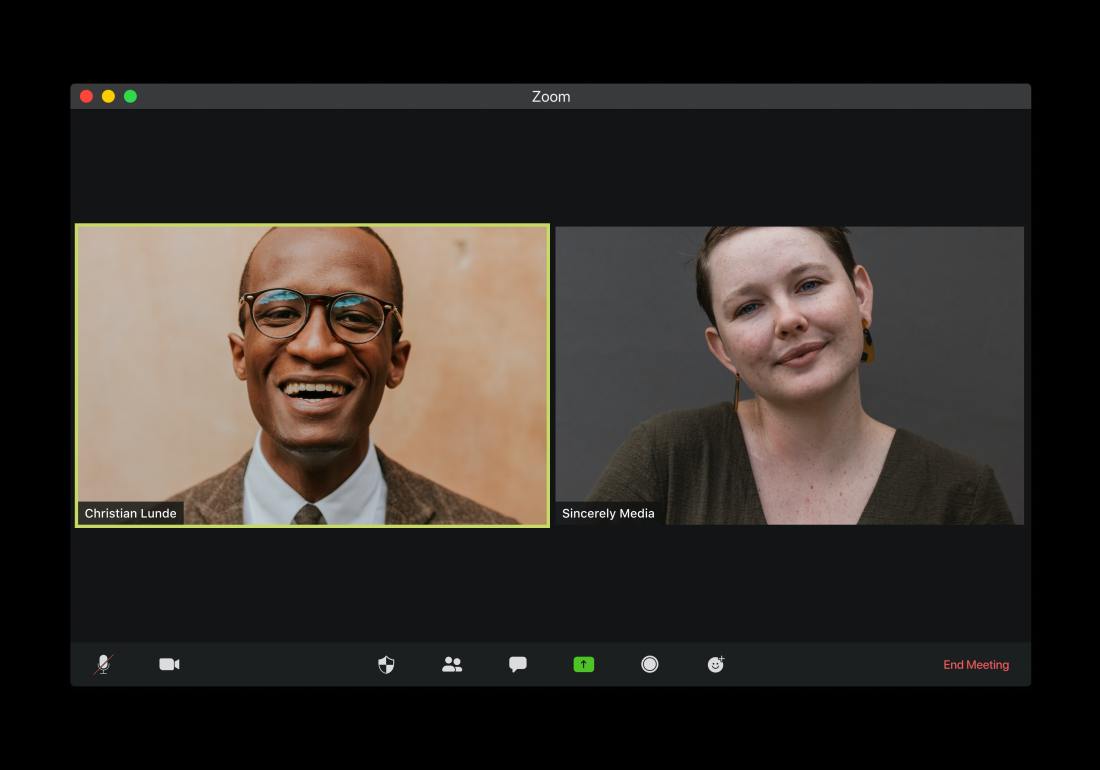
I recently learned how to hide yourself on Zoom. No, I’m not talking about turning off your camera – that’s something we all learned to do many months ago, whether to save bandwidth or to spare others the sight of our morning hair or living rooms. Rather, I’m talking about turning off the video of ourselves that we see by default whenever our camera is switched on. In other words, I’m talking about letting others see you without having to see a constant reflection of yourself. Like, you know, how meetings used to be.
Welcome Worry

For me, and I’m sure for many, gathering information is a coping mechanism. It’s a distraction. It’s a strategy to create the impression of being productive and in control. It’s a way to avoid discomfort. Unfortunately, it doesn’t always allay anxiety – in fact, quite the opposite is often true. But after much research and reflection (my other obsession), I’ve started to consider whether perhaps I need to reframe the way I think about these compulsions, instead of trying to fight or fix or apologise for them. Instead of seeing them as the strategies of an incurable neurotic, maybe I need to tell myself a different story.
Mental Health is Invisible

Perhaps one of the reasons mental health is so hard for us to talk about, let alone deal with, is that it’s mostly almost invisible to us. That is, not only is it not spoken about at a social and societal level, it’s often not even really noticed at an individual level. Our mental problems are less visible to us than our other physical problems precisely because we’re in them. Put differently: we don’t look at them, we look from them. This is Part 1 of a series on the topic of the nature of mind and the concept of self.
 All & None of the Above