
Privilege is not having to look at things hidden in plain sight.
Privilege is what we take for granted.

Privilege is not having to look at things hidden in plain sight.

As a person who's prone to getting burned at work, I've come to realise that I'm often the one feeding the fire. It’s hard to take responsibility for burnout when our culture of glorified individualism and over-achievement has a lot to answer for, and when work-life boundaries get increasingly dissolved by technology, but we have to own anything we wish to change. And perhaps, while taking personal ownership for it, we can also take burnout less personally.

Who’s on your "committee”? As an overthinker, as well as a chronic pollster of others' opinions, I've come to wonder: What about the committee inside my own head? And what if talking to ourselves in the right way can help us to pacify the tiresome self-talk?

Open awareness meditation is not about choosing a single focus or anchor but rather about keeping an open focus (if that’s not a contradiction in terms) and staying anchored to the moment itself.

Curiosity says we should place greater value on questions than answers; on seeking understanding rather than making assumptions; and on challenging the things we take for granted every day. But equally importantly, I think, curiosity is about a quality of attention rather than a sure-fire technique to get to solutions or closure. There is a difference between wanting to understand something and needing to have certainty about it. What are some things we can do to incorporate curiosity in a mindful way, to suspend our habitual responding?
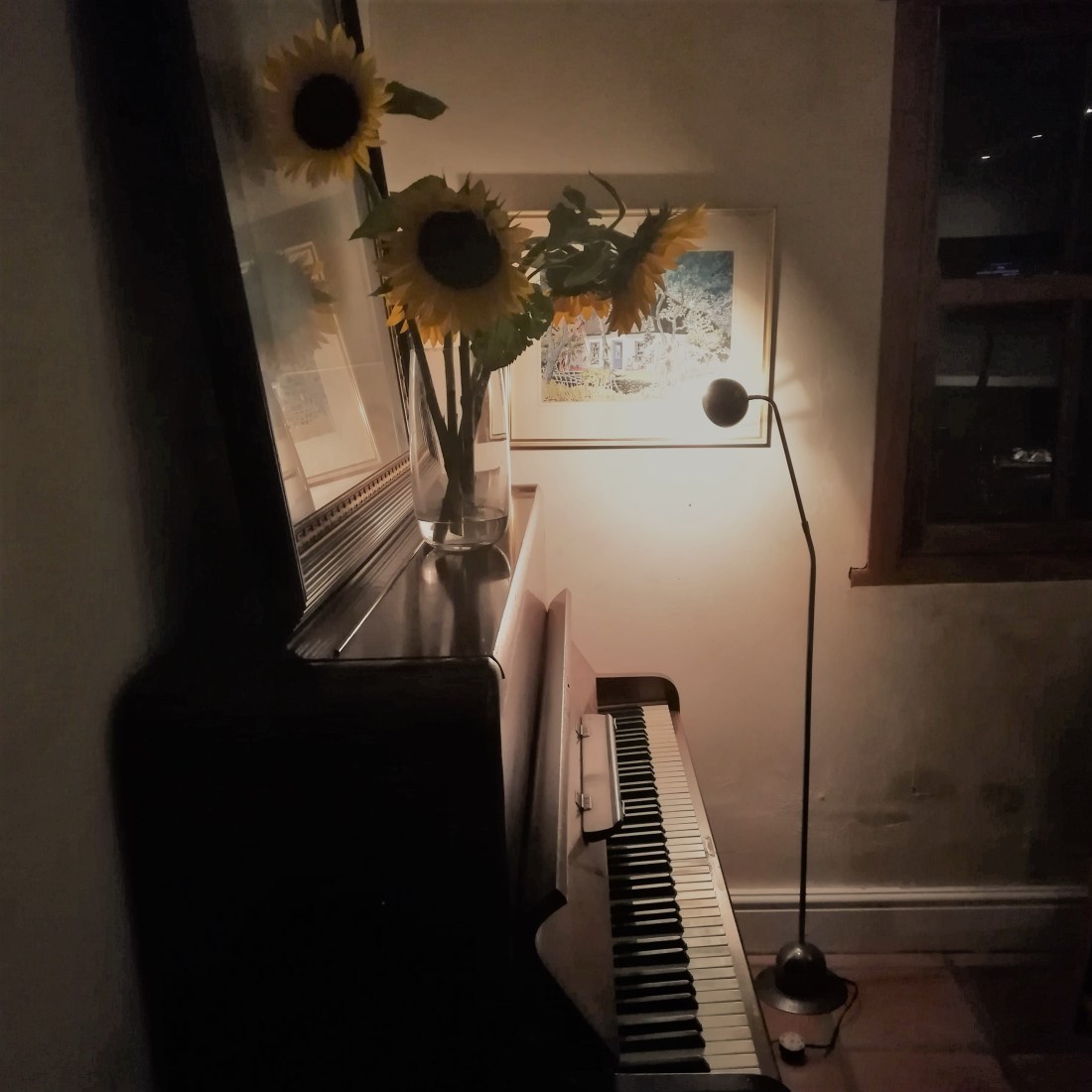
I’ve more than once noticed some interesting links between mindfulness and performing classical music. It might seem a bit esoteric, so bear with me. This article is not just about music; it is about the parallels between executing a craft and different states of mind and productivity.

What are the differences between self-care and self-compassion? There is a sense that the one is about behaviour and the other is about regard; hence, self-care is something we do, in the form of activities or rituals, while self-compassion (or perhaps more commonly referred to as self-love) is an attitude we have towards ourselves. In this post I explore the issues I have with some interpretations of self-care in the mainstream – how it has become monetised, used as yet another form of consumerism, and even become a way of avoiding responsibility for real self-nurturing and growth. But I’ve also been reminded that self-compassion is the conviction, the fundamental self-acceptance, that is necessary to enable self-care in the first place. After all, some days you’re too down to even self-sustain, let alone deem yourself worthy of looking after.

Even though we might spend most of our time absorbed in present or future-focused activities, chances are that our evaluations of ourselves in the present moment are based almost entirely on the past. One theory even suggests we have a bias towards seeing ourselves as “complete” in the present moment. If the past is going to prompt us to change in a way that’s positive, and the present moment is where we have the power to begin any change and be clear-sighted about the future, then we need a space right here to be able to “put down” what’s gone before.
 All & None of the Above