

Whereas in my last piece I considered anxiety as fear of the future, in this post I reflect on the ways in which it might in fact derive from the past. Rather than being a “fear of future feelings”, as I put it, perhaps anxiety can be viewed as a way in which our fearful past selves keep up with us.
Tag: self-awareness
On virtues

My mother used to quote this poem (which I only recently Googled to discover that it was penned by the same man who gave us The Sheep Pig): “Patience is a virtue, Virtue is a grace, Grace is a little girl who wouldn’t wash her face.” - Dick King Smith If there isn’t some cynicism around virtues themselves, I believe there is certainly cynicism around aspiring towards them. Where does this come from? What is the value of virtues? And is there value in contemplating qualities that might seem lofty and vague at best, and therefore unattainable or meaningless at worst?
Real Part 3: The Blind Rise

In Real: Part 2, I spoke about how our experience can shape our consciousness, specifically our awareness and understanding of others. I considered how privilege can make us blind to others’ perspectives and other people’s ways of being in the world. In this post, I ask the question: Once we’ve recognised this – once we’re confronted with the (usually severe) limitations of our own perspectives – what then? How do we show up nonetheless? How do we embark courageously on a journey of “filling in the picture”, of updating our maps, knowing that not only have we been blind and somewhat stupid up until this point, but also we will necessarily get it wrong and cause further hurt along the way? Finally, I explore what showing up means in terms of how we engage with reality.
Real (Part 1)

What makes us “real”? I’m not talking about knowing whether or not we exist, whether we are live flesh and blood, or even whether we are conscious, but rather about what makes us real “in context” - and, more importantly, "in relation". In Margery Williams's The Velveteen Rabbit, the Skin Horse tells the Rabbit that we become Real by being loved. Are we not also seen into realness?
The Power of the Third Person
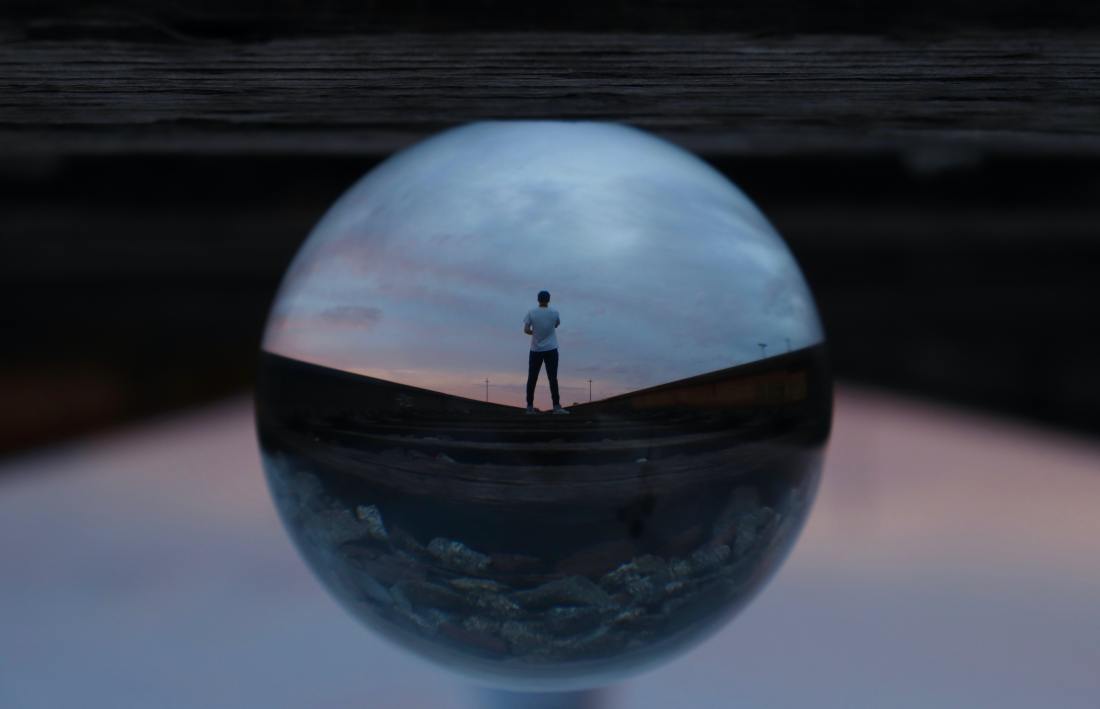
In a webinar I attended once on the value of presence, the presenters shared a metaphor for being mindful of your own thoughts: "Engage your third person". In storytelling, the third person is used as a form of narration that is outside of the action. Can we play third person or “third party” to the action in our own minds? Are we able to play not just the role of mediator, but also of witness? And when would this be useful?
All in your head

I had a realisation recently: "It’s all in your head” doesn’t necessarily mean “It’s not real”. This is a personal stance with feeling behind it, and my feeling is essentially that being told that something is “all in your head”, or suspecting the same, can feel for the most part invalidating, isolating and even a bit cruel. The specific example I had in mind was when people use this to explain when somebody experiences physiological symptoms which seem to have no obvious physical origin – typical examples being chronic pain, fatigue or fibromyalgia. In this case, “It’s all in your head” usually implies “There’s something wrong in your head”, which, true or not, may be interpreted as “There’s something wrong with YOU” “It’s all in your head”, in other words, to me usually suggests “It’s not real”, which is to invalidate someone’s personal experience – or at least to tell them they’re on their own.
Mental Health is Invisible

Perhaps one of the reasons mental health is so hard for us to talk about, let alone deal with, is that it’s mostly almost invisible to us. That is, not only is it not spoken about at a social and societal level, it’s often not even really noticed at an individual level. Our mental problems are less visible to us than our other physical problems precisely because we’re in them. Put differently: we don’t look at them, we look from them. This is Part 1 of a series on the topic of the nature of mind and the concept of self.
Looking myself in the I

When someone looks you in the eyes, you become a person to that other person. At the same time, you become more aware of how you see yourself, of your projected mirror-face. In other words, you become self-conscious. Is self-consciousness what's really behind our inability to see others? Is the ability to choose between being a self and being a group, and even forgetting oneself, a privilege? And is it possible to replace self-consciousness with self-awareness, or just ordinary presence – possibly even without a self in the mix?
 All & None of the Above